Could Fascia Be Contributing to Your Chronic Musculoskeletal Pain?
You have back pain, so naturally you focus on your back. Or maybe it is your heel, neck, shoulder, or hip that keeps bothering you.
But what if the place that hurts is not the whole story?
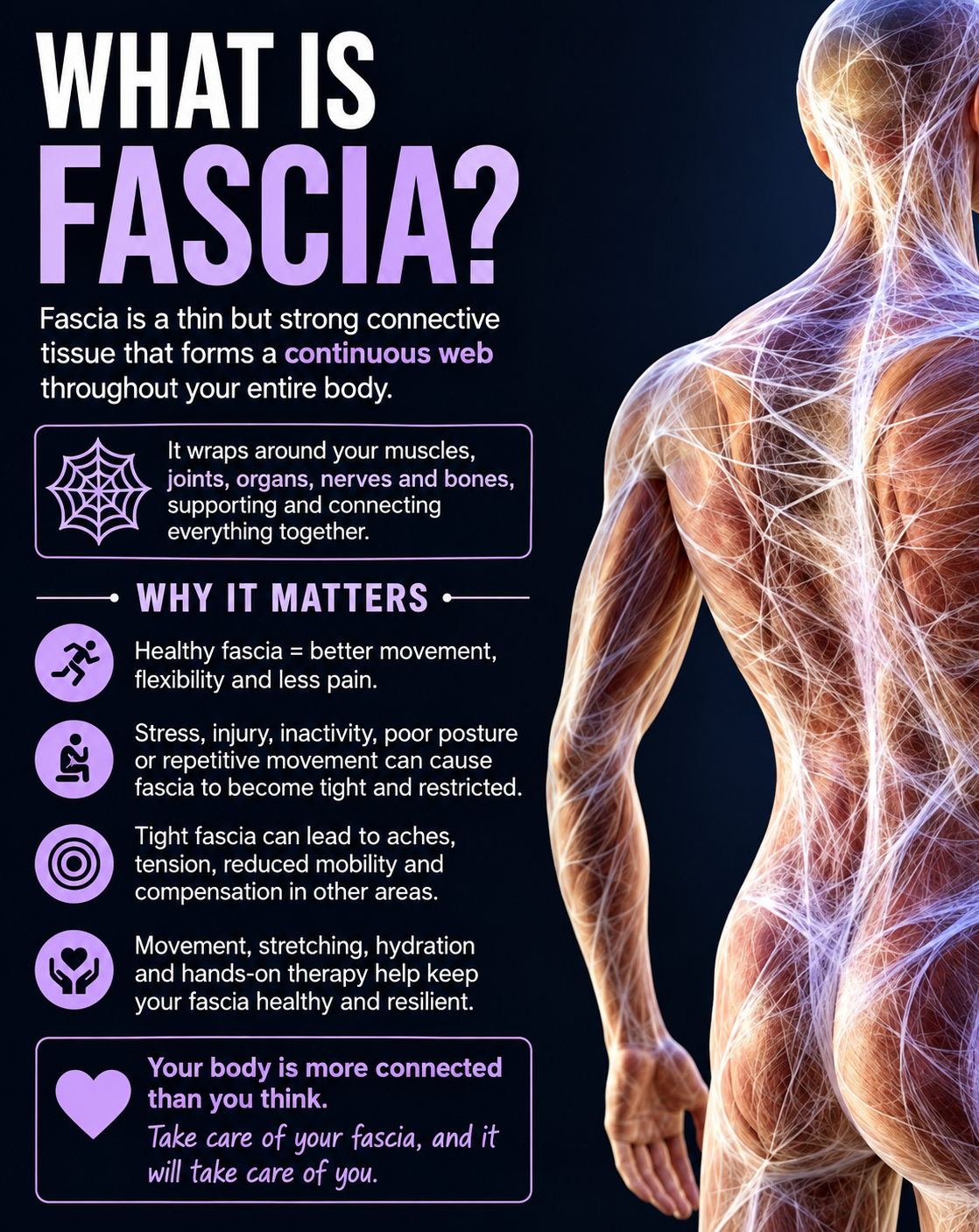
One often-overlooked piece of the chronic pain puzzle is fascia, the interconnected connective tissue network that surrounds and supports muscles, organs, nerves, and other structures throughout the body.
For years, fascia received relatively little attention. Today, growing research into the fascial system is helping us better understand how this tissue may influence movement, stiffness, and musculoskeletal pain.
What Is Fascia?
Think of fascia as a continuous web running throughout your body.
It is made primarily of collagen and elastin fibers and contains hyaluronic acid, which helps tissue layers glide smoothly over one another. Fascia also has its own blood supply and is richly supplied with sensory nerves.
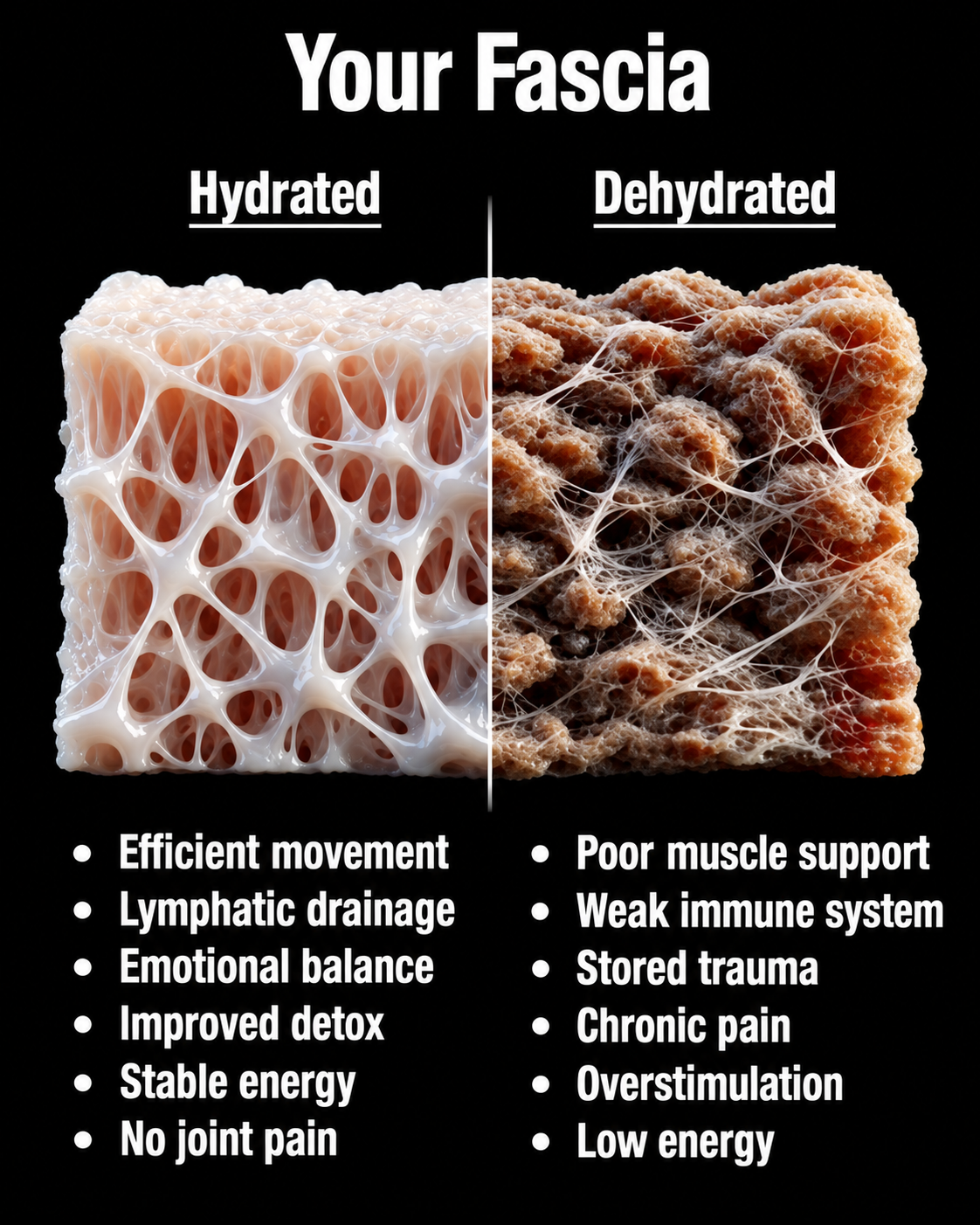
Healthy fascia is designed to move and glide. When its normal movement becomes restricted, whether following injury, repetitive strain, inactivity, or other factors, you may experience stiffness, altered movement patterns, or discomfort.
That interconnectedness is one reason fascia has become an interesting area of study in chronic musculoskeletal pain.
Can Fascia Cause Pain Somewhere Else in the Body?
Potentially, and this is where fascia becomes especially interesting.
Because the fascial system connects different areas of the body, tension or changes in one location may influence movement somewhere else.
Imagine that you injured your ankle years ago. You may unconsciously change how you walk to protect it. Over time, those compensations can affect the muscles and connective tissues farther up the kinetic chain.
Eventually, you may notice discomfort in your hip or lower back.
This does not mean every case of back pain begins in the foot. It does mean that chronic pain deserves a broader evaluation than simply asking, “Where does it hurt?”
At FAIM Health, that whole-person perspective is important. Instead of focusing only on the symptom, we want to understand the factors that may be contributing to it.
Why Plantar Fasciitis Is a Good Example
Plantar fasciitis is often approached as a problem isolated to the heel or foot.
But if symptoms repeatedly return, it can be helpful to look beyond the painful area.
How are your calves moving? What about your hamstrings, hips, pelvis, and lower back? Has an old injury changed your movement or alignment?
A thoughtful evaluation considers these connections rather than assuming the painful area exists independently from the rest of the body.

How Are Fascial Restrictions Evaluated?
There is no single test that explains every case of fascial or musculoskeletal pain.
A detailed medical history and physical examination can provide important clues. In some situations, clinicians may also use imaging.
Dynamic musculoskeletal ultrasound can allow a clinician to observe tissue layers as they move, while MRI may identify structural changes such as fibrosis or adhesions.
The appropriate evaluation depends on the individual, their symptoms, and their medical history.
What Can Help Support Healthy Fascia and Movement?
Several approaches are commonly used to address mobility and fascial tension, including:
Physical therapy and manual or myofascial techniques
Foam rolling and targeted massage
Gua sha
Massage or percussive massage tools
Cupping
Appropriate stretching and movement
These approaches are not a universal solution for chronic pain, and research into specific fascial manipulation techniques continues to evolve. What helps one person may not be appropriate for another.
The goal is not simply to “release fascia.” It is to understand the bigger picture behind your symptoms and develop an individualized strategy that supports comfortable, healthy movement.
Chronic Pain Is Often More Than One Thing
Chronic musculoskeletal pain can be complex.
Past injuries, movement patterns, sleep, stress, nervous system signaling, inflammation, lifestyle, and emotional well-being may all play a role. Sometimes imaging does not reveal an obvious structural explanation for persistent pain, which makes a broader assessment even more important.
Your symptoms are information.
Rather than simply asking how to quiet them, it can be valuable to ask what factors may be contributing to them and what your body needs to function more effectively.
If you have been living with persistent pain, stiffness, or recurring musculoskeletal symptoms and want to explore a more personalized, whole-person approach, visit the FAIM Health website to learn more about booking a call with us.