Healthy Aging and Cancer Prevention: Lifestyle, Screening & Survivorship
As we kick off Healthy Aging Month this September, I invite you to prioritize your health in this final quarter of 2026. I have talked about chronic metabolic issues and autoimmunity being on the rise but have not yet touched on the rising rate of cancers across all age groups.
I think that this is an important subject to herald in aging gracefully because the lifetime risk of any of us being diagnosed with an invasive cancer is as high as 38% (one in 3 of us will get some form of cancer). Yet, the 5 year survival rate has reached a historic milestone of 70% (for diagnoses between 2015-2021).
So, while cancer death rates continue to decline, our lifespan more so than ever needs to match our health span. This is not what I see as a physician. I see the high survival rate but patients are not in the best health that they can achieve. Low energy, anxiety, skin and nerve issues, weight gain and pre diabetes are rising in this group.
Can Cancer Be Prevented? What We Know About Reducing Risk
First, let me start with the Prevention of cancer—can this truly be prevented?
While we cannot guarantee complete prevention, we do know that a healthy lifestyle and medical steps can lower your risk, especially if you do not have genetic risk factors for cancer such as oncogenes that run in your family—the classic example being BRCA-1 and 2, MMR genes leading to Lynch syndrome, or APC gene and colon cancer.
Here are these validated lifestyle and medical screens that could lower your risk:
Lifestyle Strategies That May Help Lower Cancer Risk
1. Quit Smoking. The association between smoking and lung cancer and bladder cancer has been well described, and this is the first step in prevention.
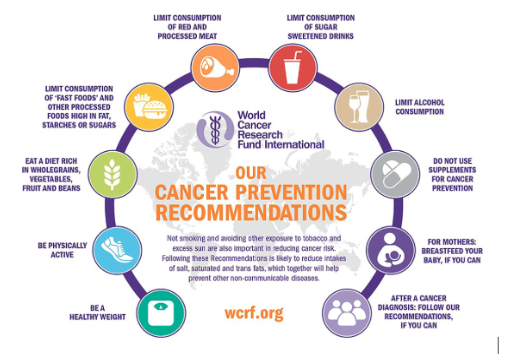
2. The second step is eating a largely plant-based diet that focuses on whole grains, legumes, colorful seasonal vegetables, and fruits while limiting red meat, processed meats, and sugars.
Today we know that 3 major chemical groups in plant-based foods called Polyphenols, carotenoids, and Glucosinolates can attack each of the 10 steps that have been described in the formation of cancers. The best chemotherapy can target only 3 of these mechanisms for the development of cancer!
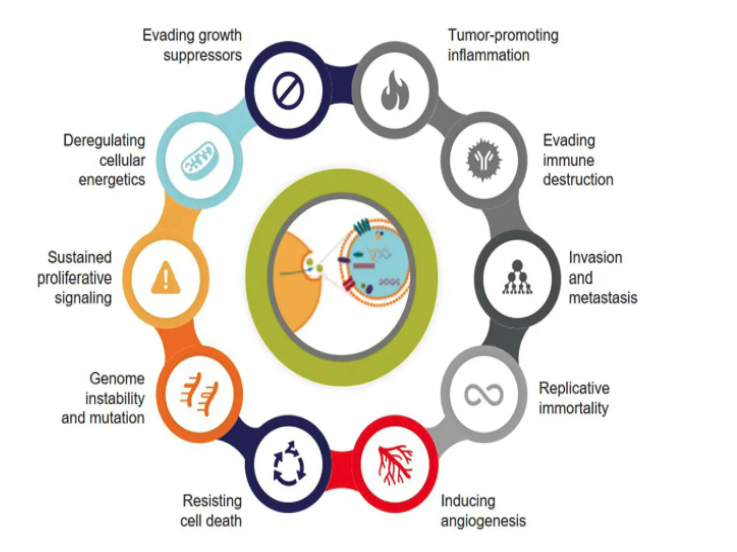
Food Is Prevention and Medicine
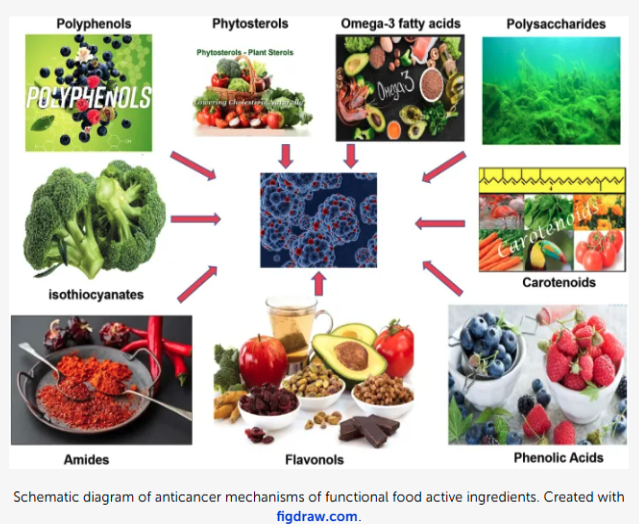
Taken from Frontiers in Nutrition July 2025—showing food’s active ingredients that can affect both cancer prevention and therapy.
3. Maintaining a healthy weight has a lot to do with metabolic fitness and not just the scale weighing you as being ideal for your height. So a lean person has as much of a risk of developing cancer if their muscle mass and strength are not strong enough to support their metabolism and energy production.
4. Exercising regularly supports oxygenation of tissues and also aids in maintaining metabolic fitness. Cancer cells thrive in a low-oxygen environment.
This is why it is important to walk during treatment for cancer—and be out in nature.
5. Limiting alcohol can reduce breast, colon, and liver cancer. Much as we may dislike hearing this, zero alcohol consumption is the safest choice.
6. Protecting your skin from harmful UV rays and yet getting enough sunlight is the key. When using sunscreens, choose products that do not contain carcinogens. Benzene is found in some aerosol sprays and is not an active ingredient; benophenone formed by octocrylene in UV-blocking agents has been linked to cancer. Use mineral sunscreens as they are the safest.
Vaccines and Recommended Cancer Screenings Matter, Too
7. There is data to show that the HPV vaccine can prevent cervical and oral cancers, and the hepatitis B vaccine can prevent hepatitis B-induced liver cancer risk.
8. Getting screened—follow the recommended screening guidelines for colon, breast, cervical and lung cancer prevention known as the USPSTF (United States Preventive Services Task Force) A & B screening.
What Is Multi-Cancer Early Detection (MCED)?
9. A NOVEL SCREEN is based on a much earlier detection of several cancers known as Multi-Cancer Early Detection (MCED) that has been clinically validated.
We have already noted that 1 in 3 individuals will develop cancer in their lifetime, and now I am sharing with you that 70% of cancer deaths are from cancers without recommended screening options.
Only 5 out of >100 known cancer types have recommended screening tests.
This is where a unique test called the Galleri test comes into play. This test looks at the unique fingerprint that cancer leaves in your blood (it is analyzing methylation patterns of cell-free DNA, cfDNA). If detected, this test also predicts the most likely origin of the cancer signal and can guide diagnostic workup.
The Galleri test screens for more than 50 cancer types.
Understanding the Galleri Multi-Cancer Early Detection Test
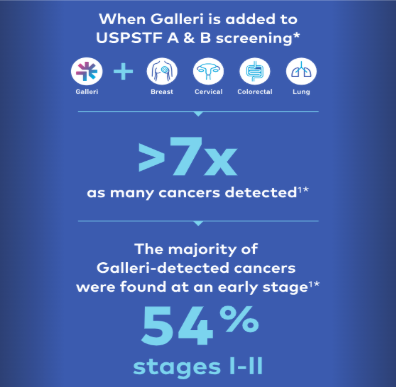
The development of methylation fingerprints started a wide race of companies vying for this space of early detection. Galleri started early and has the most robust database and studies that are still ongoing. It has the lowest false positive rate of any MCED.
It has a high positive predictive value of 62%—this is the proportion of people diagnosed with cancer after a cancer signal was detected and has a high cancer signal origin accuracy of 93%.
To date, they have 380,000+ participants whose data are being analyzed over time, and leading medical cancer centers have patients participating—Dana-Farber Cancer Institute, Memorial Sloan Kettering, Cleveland Clinic, Knight Cancer Institute, etc.
This test is being studied, Pathfinder 2, and has enrolled 35,878 participants.
The early results presented at the American Society of Clinical Oncology annual meeting, May 31, 2026, in Chicago, IL, show the following:
Based on the first ~25,000 participants with 1 year of follow-up—Pathfinder 2 study.
Note that Galleri is a multi-cancer early detection (MCED) screening test designed for people without a known cancer diagnosis to find hidden cancers early, and it is quite different from personalized recurrence monitoring tests such as Signatera, which is performed on the tissue obtained from the original cancer at biopsy or surgery.
Cancer Treatment: Supporting the Whole Person During Therapy
Secondly, comes the stage of cancer treatment.
At this stage, an oncologist, a surgeon, and a radiation oncologist are the key players. But as Primary care and functionally driven physicians, we too play a valuable role in helping the patient decide how they will manage their lifestyle during this very vulnerable period.
I have prescribed PROLON—5 day pre packaged fasting program with <750 calories and 100% plant based to patients about to undergo chemotherapy as they have been shown in elegant studies to have far fewer side effects from their treatment.
This type of fasting is known as a fasting-mimicking diet and works along with cancer therapy to increase cancer cell sensitization to the chemotherapeutic agent.
Targeted supplements are also key, as well as knowing what to avoid and the timing of these supplements as it relates to their treatment, so that we can get the maximal kill effect of chemo with the maximal protective effect in the aftermath of such treatment that also affects normal cells.
During this phase, fasting, liquid-high vegetables, and soft-cooked vegetables with plant-based protein are highly recommended to deal with nausea and vomiting.
Cancer Survivorship: Supporting Health After Treatment
Care of the patient after the treatment of cancer is known as Care of the Survivor.
This is largely an open field with not much data but a very frightening place for the survivor. Most surgeons follow their patients for a year post-surgery, and oncologists for about 5 years.
I have talked about this at an Oncology convention and care deeply about the ongoing support of these individuals to maintain a healthy lifestyle.
This kind of support then prevents the next cancer, and steps can be taken to allow them to age gracefully and largely recover from the aftermath of the battle fought against their cancer in the treatment phase.
Healthy Aging After Cancer: Supporting Whole-Body Health
This is a wonderful opportunity to correct imbalances in key systems in their bodies, such as maintaining good gut health, maintaining metabolic efficiency as measured and tracked by reliable metrics, reducing inflammation and toxins, and finally managing hormones.
Here, the Galleri test is less useful until at least 5 years have passed. But other cancer cdna signals, such as Signatera, are performed by their oncologist if they had the test done at the time of the original cancer diagnosis.
Signatera is "tumor-informed," meaning it sequences your specific removed tumor tissue to create a personalized 16-mutation genetic fingerprint used to track your unique cancer.
A Proactive Approach to Cancer Prevention and Healthy Aging
I hope that this gives you insight into this rather heavy topic on cancer but also instills in you hope that at every step, you can play a role in directing your health status proactively.
So whether it is for yourself or your friend or loved one, please share this article.
For those of you interested in doing the Galleri test, it is being offered at a $200 discount as long as your blood is collected before October 2nd, 2026.
You can schedule a new patient appointment or a current patient appointment to get started on ordering your test.